
One Collective Elgin March 2026

Sleep, Stability, and the Brain

Why Rest Is Foundational to Recovery

Three years ago, when I was working at the Winter Shelter every night, I observed something seemingly insignificant. One of my friends experiencing homelessness came every night. He’s an older gentleman, almost retirement age, and he drank a lot. For the first couple of weeks, he’d come in, read for a bit, and go to sleep. A few hours later, sometime between 1 AM and 3 AM, he’d wake up. He would sit at a table and read or work on a puzzle, trying to go back to sleep, but rarely succeeding. By around 4/5 AM, he got dressed and went out for the day.

Around 5:30 AM one morning, he came up to the desk and looked me dead in the eye. With an almost toothless smile hidden behind a ragged grey beard, he said, “That was one of the best nights of sleep I’ve had in a long time.” He didn’t get up once that night. He slept through just about every night of the entire season that year.

When we talk about homelessness, we often focus on housing supply, employment pathways, addiction treatment, or mental health services. Please don’t misunderstand, all of those matter deeply. But there is a foundational piece that rarely gets the attention it deserves: sleep.

Sleep is not a luxury or a secondary comfort. It is a biological requirement for cognitive stability, emotional regulation, and physical health. Without consistent, restorative sleep, the brain begins to change in measurable ways. For individuals experiencing homelessness, sleep disruption is not occasional—it is chronic. Understanding what sleep does to the brain helps us better understand what people are actually carrying when they walk through the doors of the shelter.

What Healthy Sleep Does for the Brain

Research consistently shows that adults require approximately seven to nine hours of sleep per night for optimal functioning (Watson et al., 2015). However, the quantity of sleep is only part of the equation. The quality and consistency of sleep are equally important.

During deep, restorative sleep, several critical neurological processes occur. The brain’s glymphatic system clears metabolic waste that accumulates throughout the day (Xie et al., 2013). The hippocampus consolidates memories and supports learning. The amygdala, which processes threat and emotion, recalibrates. Meanwhile, the prefrontal cortex—the region responsible for executive function, impulse control, and decision-making—restores its regulatory capacity.

In other words, sleep is when the brain repairs itself. It is the reset cycle that allows emotional control, rational thinking, and long-term planning to function the following day.

When sleep is consistent and restorative, individuals demonstrate improved mood regulation, stronger working memory, better stress tolerance, and greater cognitive flexibility. These are the very capacities required to navigate complex systems, make long-term decisions, and manage adversity.

What Happens When Sleep Is Inconsistent or Fragmented

When sleep becomes fragmented or chronically restricted, the effects on the brain are significant.

Even short-term sleep deprivation increases amygdala reactivity—in one study by Yoo et al. (2007), emotional responses were up to 60% more reactive after sleep loss. At the same time, the functional connection between the amygdala and the prefrontal cortex weakens, meaning emotional impulses are less effectively regulated.

Over longer periods, chronic sleep disruption elevates cortisol, increases systemic inflammation, and impairs immune function (Irwin, 2015). Neuroimaging studies have identified changes in gray matter density and functional connectivity in regions associated with attention, learning, and emotional regulation (Krause et al., 2017).

This is not simply about feeling tired. It is about sustained neurological strain that alters cognitive performance and emotional stability. When someone is chronically sleep deprived, executive functioning declines. Planning becomes harder, impulse control weakens, emotional responses become more volatile, long-term thinking narrows, and stress tolerance drops.

Sleep in the Context of Homelessness

Now consider the realities of homelessness.

The very skills required to secure housing, maintain employment, attend appointments, or follow through on treatment plans are deeply dependent on adequate sleep.

Individuals sleeping outdoors often remain in a constant state of “survival mode”—hypervigilance, scanning for threats, just trying to make it through the day. Noise, exposure to the elements, fear of assault, and the need to protect belongings prevent deep sleep cycles. Even within shelter environments, early wake-up times, shared spaces, lighting conditions, and environmental stressors can interrupt REM continuity.

Research confirms that sleep disturbances are significantly more prevalent among homeless populations than housed individuals. In one study, over 60% of homeless adults reported clinically significant insomnia symptoms (Reitzel et al., 2017). Other research has identified high rates of trauma-related sleep disruption and chronic insomnia within this population (Taylor & Sharpe, 2008).

What this means neurologically is that many individuals experiencing homelessness are functioning in a prolonged state of cognitive and emotional exhaustion.

Prolonged hypervigilance activates the sympathetic nervous system, keeping the body in a stress-dominant state. Over time, this mirrors patterns observed in trauma-related disorders, including heightened anxiety, irritability, emotional numbing, and difficulty forming trust (Meerlo et al., 2008).

When someone has not experienced consistent, restorative sleep in months or years, we should expect dysregulation—not because of character deficiency, but because of biology.

Rethinking “Stability” Through a Neurological Lens

It’s easy to interpret certain behaviors as non-compliance, poor decision-making, or lack of motivation. However, neuroscience invites a deeper consideration.

Chronic sleep deprivation impairs executive function. Executive function governs planning, self-control, organization, and long-term goal orientation. Without it, navigating bureaucratic systems, maintaining appointments, or regulating emotional responses becomes significantly more difficult.

Housing provides more than shelter from the weather. It provides neurological stabilization.

Safety allows deeper sleep.

Deeper sleep restores executive functioning.

Restored executive functioning improves decision-making.

Improved decision-making supports long-term stability.

The relationship is cyclical, and it works in both directions.

This is one reason why non-congregate models and stable, predictable shelter environments matter. When individuals have consistent access to a place to sleep, reduced noise exposure, predictable routines, and a sense of emotional safety, sleep quality improves. Research suggests that improvements in sleep can produce measurable changes in mood regulation and cognitive performance within weeks (Walker, 2017).

Sleep does not solve homelessness on its own. But without it, every other intervention becomes more difficult.

Why This Matters for Our Work

When we advocate for stable housing models, trauma-informed shelter design, or predictable routines within our programs, we are not simply providing comfort; we are creating the biological conditions necessary for human recovery.

Rest is foundational to dignity, rational thought, and emotional resilience. If someone has been living in survival mode, their brain has been living there too. Part of the work you’re involved in is restoring the capacity to rest.

And that is more powerful than we often realize.

One Collective Elgin Dec 2025

Late Fall, Early Winter, and Re-learning to Breathe

If it’s felt quieter than usual from me these past several weeks, I want you to know I haven’t gone anywhere. I’ve just been living in that strange in-between space where the work is constant, the days move fast, and I occasionally look up and realize I’ve been holding my breath without meaning to.

Since my last newsletter—ironically named, “An overdue update!”—the pace has picked up in a big way (you can view past newsletters here). Most of November was spent preparing for the Winter Warming Shelter—staffing, training, policies, logistics, coordination with partners, and all the unglamorous but essential details that make overnight shelter safe, dignified, and sustainable. As winter in Illinois often does, the weather arrived on its own timeline, and we ended up opening the shelter early on November 30th. It was one of those moments where preparation meets reality, and you open the doors because people need somewhere warm, ready or not. Thankfully, a local church, Common Good Church, spent its usual service time that Sunday helping get the shelter space ready for that night.

December hasn’t slowed things down. In fact, it’s added another layer. Last Wednesday, the City released the RFP for the Lexington Motel (where they moved everyone from Tent City at the beginning of this year), which has been a long-anticipated step and has generated a lot of conversation, questions, and energy. Right now, we’ve been collaborating with some key local partners to explore how we might apply and contribute toward a thoughtful, community-centered solution. There’s still a lot unfolding, and much of the work is behind the scenes, but it’s been encouraging to see people leaning toward collaboration rather than competition.

Between shelter operations, ongoing casework coordination, conversations with partners, and the general weight that winter carries for people experiencing homelessness, these weeks have been full of all the things and emotions—good, heavy, meaningful, exhausting. There are days when the work feels deeply grounding and days when I realize I’ve been moving so fast that I forget to pause, breathe, or step back long enough to notice how tired I am.

I also want to share something transparently. Over the course of this year, monthly financial support has dropped by about $900 a month compared to the beginning of the year. I’m incredibly grateful to every person who gives, because this work simply wouldn’t be possible without that support. If you’ve ever wondered whether your giving makes a difference, it truly does. And if you’re in a position to start or increase support, it would directly help sustain the work I’m doing alongside our community during this season.

Through it all, I remain deeply grateful for you—for your encouragement, prayers, trust, and patience. When updates come less frequently, please know it’s not because the work has slowed or because you’ve drifted from my thoughts. It’s usually because I’m in the thick of it, trying to show up well, make careful decisions, and keep people safe and cared for.

Thank you for walking with me through this season. Thank you for your patience when I’m quieter than usual. I’m re-learning (slowly) that part of sustaining this work is remembering to breathe.

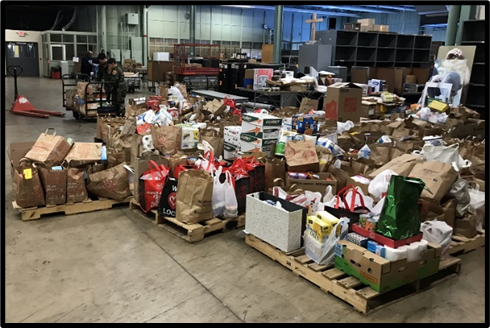
2026 Dr. Martin Luther King, Jr. Food Drive

Since 2017 FBC has partnered with the City’s Dr. King Food Drive, which has collected thousands of pounds of food for the less fortunate in our community.

Bring your donations no later than Sunday, January 18, 2026. After the second service all items will be delivered for distribution to Elgin’s food pantries.

Deadline for Donations: January 18, 2026

Suggested Non-Perishable Donations

Canned Tuna, Mackerel, Salmon
Vienna Sausage & Spam
Canned Beef Stew
Peanut Butter
Dried Northern/Pinto Beans
Canned Vegetables
Tomato Sauce
Instant Potatoes
Spaghetti Sauce
Canned Fruit
Pancake & Muffin Mix Canned Soup
Ramen Noodle Soup
Macaroni and Cheese
Noodles & Spaghetti


Applesauce
Grape Jelly
Apple or Grape Juice
Powdered Milk
Oatmeal
Grits
Breakfast Cereal
Rice, Flour, Sugar, Salt
Saltine Crackers
Cornmeal & Bisquick
Milk
Canned Chili, Spaghetti  & Ravioli
Coffee & Tea
Jell-O
Cooking Oil
Pancake Syrup
Baby Food
Cash donations can be made through FBC or the City of Elgin Website with the following QR code


NON-FOOD ITEMS
Laundry & Dish Soap
Hand Soap
Toothpaste & Toothbrushes
Paper Towels
Bathroom & Facial Tissue
Laundry Detergent
Diapers Baby Powder

Larry and Rebecca Stanton May 2025

Still Marching

Dear Friends,

In March, we sent out letters, trusting God with a big need. Like Joshua and the Israelites marching around Jericho, we’ve been walking in faith—sharing our ministry, praising God, and asking for His provision.

“Faith is taking the first step even when you don’t see the whole staircase.”
— Martin Luther King Jr.

We’re deeply grateful for so many of you who responded—some increased your giving, others returned after time away. Thank you. Every step forward brings us closer.

But the walls are still up.

Our funding is not yet where it needs to be, and we’re praying for more partners to help bring those walls down. If you’ve only ever given once, would you consider pledging consistent, ongoing support?

“Alone we can do so little; together we can do so much.”
— Helen Keller

It’s that regular giving—month by month—that keeps us on the ground, serving in Hungary and Serbia, walking alongside people in deep need.

We believe God will provide. But just like the Israelites, we must keep walking—and we invite you to walk with us.

“God does not call the equipped, He equips the called.”
— Rick Yancey

With heartfelt thanks,
Larry and Becky

Milynda Baits January 2025

When It All Comes Back Around
The other day I received a kind affirmation from a former participant of the Training of Conflict Transformation Trainers that I co-facilitated in Santiago, Cuba in 2018.  She is now the current director of Centro Lavastida, the Christian social service agency where we held the TCTT.  She said, “Recuerdo muy bien el taller que hubo de Transformación de Conflictos, todavía están muchos de los asistentes trabajando en eso. Si se repite esa formación me gustaría recibirla pues en mi nueva responsabilidad es muy necesaria. Muchas gracias por el ministerio tan hermoso que desarrolla!”

“I remember the workshop on Conflict Transformation very well. Many of the attendees are still practicing these tools. If this training is repeated I would like to receive it because of my new responsibility. It is very necessary. Thank you very much for the beautiful ministry you develop!”

We are in conversation about expanding our CoLab Cuba: Expressive Arts in Transition training to various regions throughout Cuba, starting with another cohort in Santiago. Thanks to a generous grant from the One Great Hour of Sharing offering, we are able to offer training, supervision and support for grassroot Cuban leaders in arts-based psychosocial and spiritual support. These funds are collected each year from the American Baptist Churches throughout the US to be distributed for crises and development projects locally and around the world.

For almost 25 years I have been working in partnership with International Ministries partners and faith communities. My ministry has evolved and expanded over the years: from supporting pastoral leaders through theological education, to human trafficking prevention, education, and restoration ministry, to conflict transformation and now global consulting and training in the expressive/restorative arts. God has been forming and shaping my ministry over these many years.  I count on the faithful friendship and support of so many people like you who invest in the good that God is doing through communities around the world. The relationships that have been built over the years are bearing fruit to this day. It is such a gift to be able to witness growth, desire for learning and love in the lives of folks like Heidi in Santiago. Your partnership is such an encouragement to me, especially in these times of global stress and change. Thank you for making it possible for me to see glimpses of unity, grace and hospitality embodied in our global kin. It helps to counteract the newsbites of division, gruesomeness and hostility that discourage my soul.

Please pray for the start of two new cohorts of Expressive Arts facilitators in Cuba in April/May of this year.

Tomorrow at my home church in Olympia, WA we will be praying for and sending off Sarah, Luis, and Nora Matos to their new International Ministries call in Oaxaca, Mexico. After many years of raising up a sustainable support team, they will engage in hands-on ministry with our Mexican partners. While my family and I served in Costa Rica, Sarah came to live and learn with us. It is a joy to witness the fruit of this mentoring relationship blossom. Please pray for the transition and lifegiving transformation of this global servant family as they begin their new journey in Mexico.

I am so grateful for the 11% increase in my ministry support in the last few months. Thanks to new monthly, increased, and year end givers that makeup my ongoing support team. Thanks be to God. I am praying and trust that the 20% more ($2000 a month) of my total support goal will be met soon in order to continue and sustain the global work God has called me to. Thank you for being an integral part of my life over these many years. You make a difference not only in me, but in the World.

Blessings,

Mylinda

In case you or someone you know would like to partner with me in this work, here’s the link to learn more: https://internationalministries.org/author/m-baits/

Earthquake in Myanmar March 2025

An earthquake has caused widespread devastation in central Myanmar on Friday, March 28, 2025. To date, it’s been reported that more than 2,900 have died and more than 3,400 have been injured in Myanmar.

KING OF PRUSSIA, PA, April 1, 2025

Earthquake in Myanmar,
More Help Urgently Needed

International Ministries has sent an initial grant of $10,000 in One Great Hour of Sharing (OGHS) emergency relief to partners who are providing humanitarian relief to the victims of the earthquake that caused widespread devastation in central Myanmar on Friday, March 28, 2025.

The first earthquake, with a magnitude of 7.7 struck around 12:50 local time according to the US Geological Survey. A second earthquake struck 12 minutes later, with a magnitude of 6.4. The earthquake’s epicenter was located 10 miles northwest of Myanmar’s city Sagaing. This is also near Myanmar’s second-largest city, Mandalay, with a population of about 1.5 million people – and about 62 miles north of the capital Nay Pyi Taw.

To date, it’s been reported that more than 2,900 have died and more than 3,400 have been injured in Myanmar, although it is difficult to obtain accurate information. In Thailand, authorities reported localized incidents that have left at least 13 dead and 77 unaccounted for when a building that was under construction collapsed.

International Ministries (IM) is deeply concerned for the safety and well-being of its global servants, partners in the region, and the communities they serve. All IM personnel have reported they are safe, and we are assessing the needs of our partners in Myanmar and their communities as the situation unfolds.

IM calls for urgent prayer and support for all those affected by the earthquake.

Gabhart’s March 2025

View this email in your browserClick here to download a printer friendly version.
March 2025
As Brent retired he said, “As long as MFI continues to have only one flight each day, you should do well as you step into this role.” As we started into January, both Spirit and American Airlines began to cancel flights into Haiti. This led to an increase in passenger demand. So now, we are flying into Haiti with both airplanes on the same day multiple times a month. The pace has been a bit breakneck. God is providing the stamina, but there are many late nights on the day before the flight getting both airplanes ready to go and the paperwork prepared so nothing comes back. I’ve begun to train my assistant who can fill in when we are on deputation or vacation. Please pray for wisdom and good communication on my part in that some of the tasks do not come easily for him but he is willing to fill this role as it is desperately needed.
Rainbow after an afternoon rain
Port-au-Prince is still closed to U.S. aircraft at this time. For those missions located on the northern side of the city, they have started making the journey to cities where we are able to fly in order to still be able to access supplies. This has increased our cargo loads to those locations at the same time that as the increase in passenger demand.  Please continue to pray for Haiti as the gangs control much of Port-au-Prince and are trying new routes to take control of areas that they do not currently control. Please pray for MFI for the staff and the airplanes that we will be able to continue at the pace required to meet the needs of those we serve.
.
Sam taking pictures of the new plane

Sam and the new plane

An exciting development at MFI is that the third DC-3 in our fleet has finally been delivered with its fresh coat of paint. We are so grateful of God’s provision of another airplane to help MFI be able to serve those in the Caribbean. Our maintenance team is now hard at work finishing out the standardization of the aircraft and doing the inspections to be able to bring this into our maintenance program. Please pray for them as they continue to maintain our existing fleet and ready this new plane for beginning its time at MFI. Thank you for your faithfulness in love, prayers, and support as we serve at MFI.
James and Sam Gabhart

Save the Date: We are traveling to Spokane for the Moody Missions Conference as a family! We will be in town from May 17th through May 30th. Email, call, or text to set up a time to get together. We are anticipating a great time of updating and sharing what God is doing at Missionary Flights with everyone. We also look forward to getting updates on your families too!If you are not currently receiving our monthly Prayerline with items you can pray for daily for our family and Missionary Flights, please click here to update your preferences to be added to that mailing list.

Family News
When we think about time, it’s amazing to realize just how fleeting it is. The kids have been doing wonderfully with their first year in the new curriculum program we discovered this year.  Each one of them is flourishing.  Some of their courses are year long courses, while other just a few weeks, but it’s so wonderful to see just how well they are thriving with this program.  We greatly appreciate the flexibility that we have with it, as well as the true enjoyment each of them is having with what they are studying.  The gift of the scholarship program for each of them has been the biggest blessing in it all.  We have been able to obtain desks, chairs, bookcases, subscription kits, and even Lego for them all to enjoy in their various areas of interest.

We want to share some incredible moments that have to do with Jon.  He will be 17 in early March, and we have begun  “countdown to adulthood”.  He is working regularly on being clearer with his speech, learning how to cook new things in the kitchen, and even attended his first Night to Shine event in February. Night to Shine is an event put on by the Tim Tebow Foundation around the country for one night a year, a special needs prom.  Sam had the ability to be the photographer for the one in our area. Jon had a wonderful buddy who came up to Sam at several points to praise just how smart, intelligent, and wonderful Jon is.  Jon even invited her to our church, and she came that first Sunday.  He was so proud to introduce his new friend to everyone. 
Jon at Night to Shine
Jon at Night to ShineJon at Night to Shine

As we look forward to this year, there are a lot of changes we hope to have in store for our family.  We are in process of hopefully buying our first home.  While there are still a few steps before we move from paying someone else’s mortgage to our own, we are constantly reminding each other that this is God’s house that we get the honor of living in.  We would welcome your prayers in this as we start to walk down this road.
Praises and Prayer Requests
Praise that Kathy’s knee replacement surgery went well. Prayer for her recovery in rehab. Prayer for wisdom in parenting our growing teenagers and balancing work and home; for clear direction regarding the house purchase. Praise for our faithful supporters, both in prayer and financially. Prayer for God to bless their consistency to support the work He is doing. Prayer for MFI in the needed wisdom in filling open positions, and for God to provide the correct people to fill them. Praise for the special gifts that come through at just the right time if support is short that month
Ministry Update
We are so thankful to all who are following God’s leading in supporting us. The MFI Board
increased our support level to $6,300 monthly. We currently average $5,800 (92%) monthly support. We need an additional $500 to be fully supported each month.Online Giving:
www.missionaryflights.org/gabhartORMail Checks to:
3170 Airmans Drive
Fort Pierce, FL 34946 
Memo: Gabharts #2837Click here to download a printer friendly version.Copyright © 2025 Gabharts Flying By Faith, All rights reserved.
You are receiving this email because you requested to receive communications from us.

Our mailing address is:
Gabharts Flying By Faith742 Forster AvenueSebastian, Florida 32958Add us to your address book.

Stantons November 2024

This season of Thanksgiving has been full of opportunities to reflect on God’s goodness and the many ways He allows us to share His love with others. From Serbia to Téglás, we’ve been reminded how your support makes all of this possible.

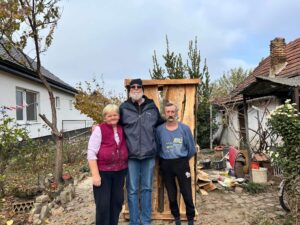
Larry recently returned from Serbia after delivering firewood to families in need. With winter approaching, these deliveries are vital to help keep families safe and warm, and it’s only through your generous donations that we’re able to provide this support. As Larry visited each family to bring firewood, he also brought encouragement and hope, taking time to build relationships with the people he met. Through these connections, he’s learning more about their lives and challenges, including medical and social issues where we can offer additional help.

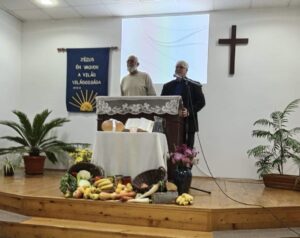
One of the highlights of his trip was speaking at the local church’s Thanksgiving ceremony. Larry shared a message about the importance of helping others and showing Christ’s love by caring for our neighbors. He encouraged the church members to continue being a light in their community, inspiring them to find joy in serving others.

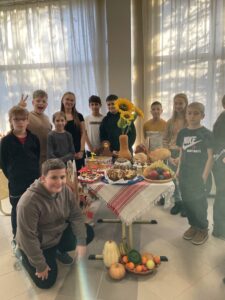
Meanwhile, back in Téglás, I had the honor of participating in our school’s Thanksgiving program. The teachers asked me to share how Thanksgiving is celebrated in America, so I gave a short speech about its history and some personal anecdotes. Here’s the twist—I delivered my speech in Hungarian! My language skills are far from perfect, but the teachers and students were thrilled that I could share in their language.

The program itself was beautiful. Each class prepared a Thanksgiving table filled with homemade treats and messages of gratitude. It was a joy to see the creativity and thoughtfulness of the students as they expressed what they were thankful for. I was reminded once again how special it is to be part of this community and how much I love sharing these moments with them.

We are so grateful for the prayers and financial support that make all of this possible. Whether it’s Larry distributing firewood in Serbia or me sharing Thanksgiving traditions in Hungary, your generosity is at the heart of everything we do. Thank you for standing with us as we continue to share God’s love across borders and into the lives of those who need it most.

We hope you’ll visit our Facebook page to see more pictures and videos for a deeper dive into Larry’s trips to Serbia and the celebrations here in Téglás. From our family to yours, we wish you a season filled with blessings and gratitude!